For many years, going overseas was essentially a business of selling products: manufacture a product, offer a competitive price, distribute it through overseas channels, capture a wave of growth, and then move on to the next batch of orders.
But in the European electric scooter market, this approach is no longer as effective as it once was.
For example, the European market entered a clear period of divergence in the first half of this year. Markets such as Germany and Portugal are still growing, while some others have started to contract. For Chinese companies, this represents a real test.
When the market was growing broadly across the board, low prices, wide distribution, and popular products could all contribute to sales growth. But once the market begins to diverge, the ability to operate and develop a local market over the long term becomes increasingly important. In other words, the market is no longer one where everyone can simply benefit from the rising tide.
Ninebot's performance in Europe provides a good real-world example of this trend.
According to its financial results, Ninebot's retail electric scooter revenue reached RMB 1.70 billion in the first half of this year, up 28% year on year. Even in some European markets where the overall category is contracting, Ninebot has continued to increase its market share.
The key competitive factors in Europe's electric scooter market are shifting toward local operations, regulatory compliance, channel services, and product segmentation. Ninebot's ability to outperform the market under these conditions is, to a large extent, the result of the localized capabilities it has built over the past several years.
Ninebot's global advantage in the electric scooter business has been firmly established through years of operation.
According to Euromonitor Consulting, based on the annual global sales value of each company's own-brand electric scooters from 2023 to 2025, Ninebot ranked No. 1 globally in electric scooter sales value for three consecutive years.
Maintaining a leading position in an industry is never easy, particularly in the world's largest regional markets.
For many years, Europe has been the world's largest electric scooter market and one of the regions where companies in the industry, including Ninebot, have made the heaviest investments and generated some of their biggest returns. Germany, in particular, is Europe's largest electric scooter market. According to third-party consulting reports, Ninebot has a clear lead in terms of sales value market share in Germany.
Ninebot has established a genuine competitive advantage in what can be considered the "main battlefield" of Europe. More importantly, this advantage has emerged in a market that is already beginning to diverge.
In growth markets such as Germany and Portugal, Ninebot's electric scooter sales have outpaced the overall market, showing that the company is better positioned to capture incremental demand. In markets where the category is shrinking, Ninebot has still managed to increase its market share, demonstrating that its growth is not simply driven by favorable market conditions. It is also gaining ground through intense competition.
Ninebot has managed to capture opportunities in growing markets while simultaneously increasing its market share in contracting ones. The quality of this growth speaks for itself: its leading position has not simply been carried by the market. It has been earned through its own capabilities.
Perhaps the biggest reason Ninebot has been able to outperform the European market is that it has never treated Europe simply as an export destination. Instead, it has treated Europe as a group of local markets to be operated and developed over the long term. This is one of the biggest differences between Ninebot and many traditional trading-oriented organizations.
The electric scooter industry spent a long period in rapid-growth mode. During that period, many brands could generate sales simply by launching new products, offering low prices, and pushing products through distribution channels. But once the market enters a period of divergence, the nature of competition changes.
Companies are no longer competing simply on whether they can sell a product. They are competing on whether they can continuously serve the local market over the long term. Ninebot's advantage lies precisely in the localized operating system it has built.
The first element is localized operations, which is actually a complex and sometimes rather "heavy" undertaking.
The European market is highly fragmented. It is essentially a combination of many individual national markets. Germany has its own regulations, Portugal has its own market needs, while Spain, Italy, Romania, and other countries all have their own differences. Consumer preferences vary, and even retail structures and regulatory environments can be very different.
In such an environment, selling electric scooters cannot rely solely on a master distributor.
The advantage of the distributor model is speed, but its limitations are also obvious. It can get products into the market quickly, but it is much harder for a distributor alone to develop a deep understanding of the local market. Channel management, after-sales service, repair support, spare-parts supply, and communication with end users all require deeper local capabilities.
Ninebot has chosen a different approach: adapting to the specific conditions of each country and continuously developing its local operations.
Its European headquarters are located in Amsterdam. The company operates through different country clusters and has established teams across multiple markets. Each country cluster has local sales, marketing, service, and retail development teams, with the ability to negotiate directly with key retailers.
The more fragmented the market becomes, the more valuable this system is. Local sales teams understand what channels need. Local marketing teams understand what consumers care about. Local service teams can solve after-sales problems. Retail development teams can maintain relationships with key partners.
Compared with simply "selling scooters into Europe," the real competitive advantage lies in being able to do business in Europe.
The second key factor is regulatory compliance.
Unlike ordinary consumer electronics, electric scooters are designed to operate on public roads, involve safety considerations, and need to fit within urban transportation systems. Regulations are therefore a fundamental barrier that cannot simply be bypassed.
Regulatory requirements vary significantly across European countries. Depending on the market, electric scooters may be subject to requirements involving road access, insurance, registration, speed limits, motor power, and other technical standards. Ninebot develops product versions adapted to the regulatory requirements of individual countries, helping ensure that its products can legally operate on the road.
This may sound like a highly detailed task, but it is extremely important.
Compliance is not only an entry requirement. It is also one of the key factors separating established brands from white-label products. When regulation is relatively loose, low-priced white-label products can still find room to survive. Once regulations become more detailed and stringent, competition begins to shift from a price war to a battle over qualifications and compliance.
For leading brands, regulation can reshape the entire competitive landscape. Low-cost white-label products may be able to capture short-term sales through aggressive pricing, but they often struggle to continuously adapt to regulatory changes across different countries. As markets increasingly introduce requirements related to insurance, registration, speed limits, and motor power, the pressure on simple distribution-based business models will continue to increase.
Ninebot's advantage is that it has turned regulatory compliance into an established capability rather than something it deals with on an ad hoc basis.
Another particularly important factor behind Ninebot's success in Europe is its ability to adapt products to different user groups and scenarios.
European consumers have different needs. Some primarily use electric scooters for commuting, which requires longer range and consistent product quality. Others live in areas with more challenging terrain and need stronger performance and capability.
For daily commuters, the key questions are whether the scooter can perform reliably every day, how frequently it needs to be charged, and whether the brakes and suspension are dependable. For users in more challenging terrain, factors such as power, handling capability, and durability become more important.
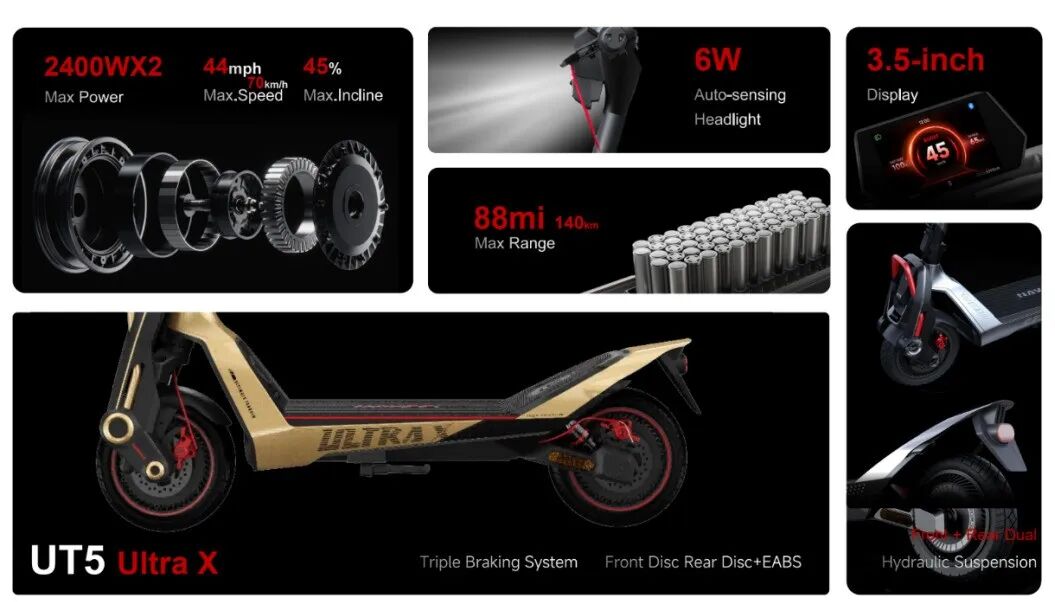
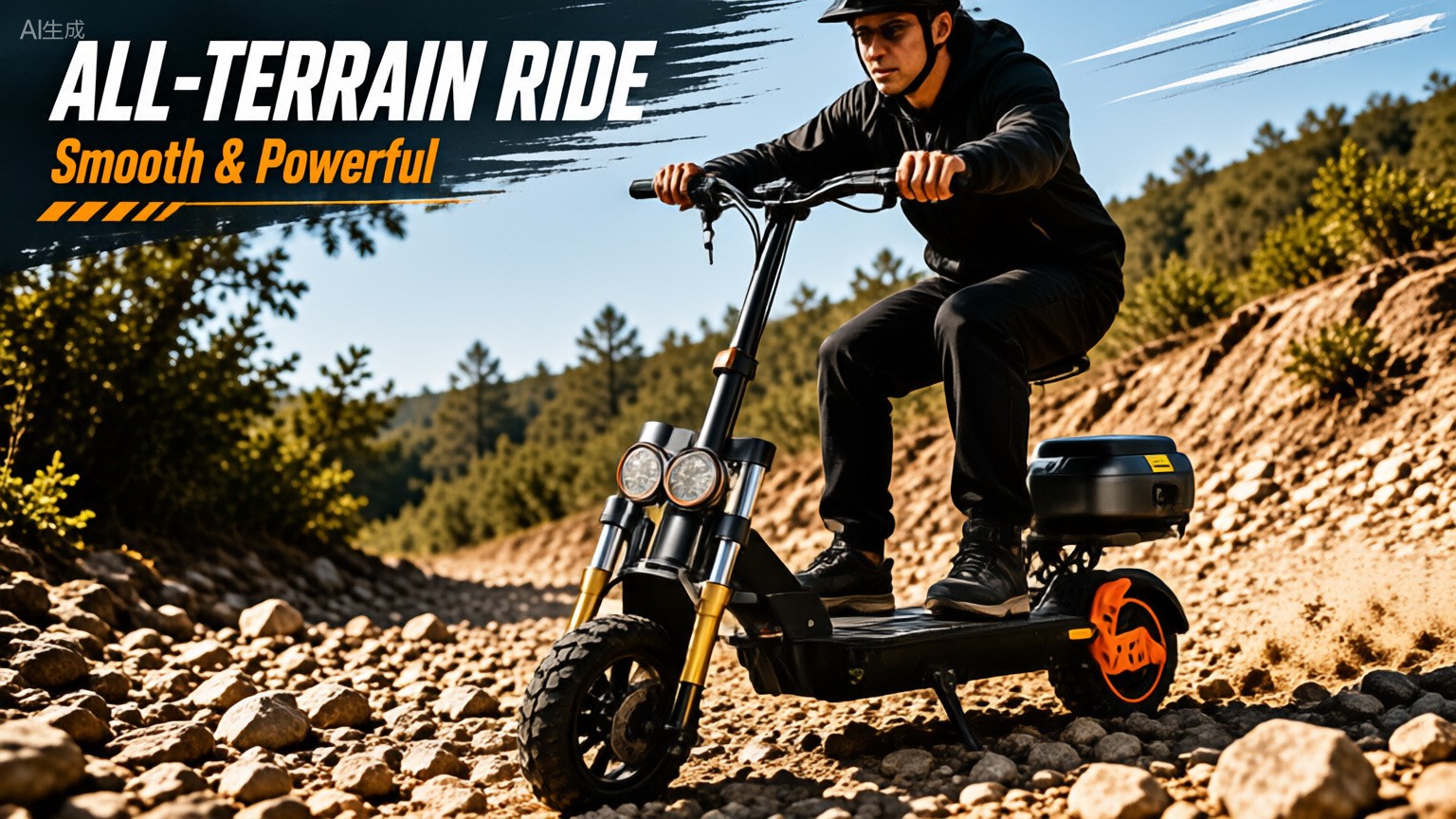
To address commuting needs, Ninebot has developed long-range electric scooter products. For countries and regions with more challenging terrain, it also offers off-road-oriented products.
This shows that Ninebot is not simply selling standardized products. It is segmenting its product portfolio around different use cases and consumer needs.
After years of developing the European market, Ninebot has built an end-to-end capability — from understanding consumer needs at the front end, to product planning, R&D and production standards, go-to-market execution, maintenance, and technical support.
Product strength alone cannot achieve this level of market penetration. Fully implementing products, compliance, channels, and service capabilities across Europe requires long-term and consistent investment. This is one of the fundamental reasons why Ninebot has been able to maintain its competitive position.
The changes taking place in Europe's electric scooter market have deeper structural causes. Companies that understand these changes deeply will be better positioned to adapt to them.
In fact, electric scooters in Europe are gradually evolving from "recreational short-distance mobility devices" into mainstream commuting vehicles. This is one of the strongest underlying drivers of the category's development in Europe.
The shift from a recreational product to an everyday transportation tool similar to a bicycle fundamentally changes the underlying demand for the product.
In the past, consumers often bought electric scooters as discretionary purchases driven by interest. They needed to be fun, novel, and fashionable. But discretionary consumption is more susceptible to changing trends: products can become popular quickly and fade just as quickly.
Today, more and more European consumers are using electric scooters for daily commuting and last-mile transportation. They can connect users to metro stations or help them move efficiently through urban neighborhoods. For many consumers, this is simply a convenient transportation option.
Compared with the earlier stage of the market, commuting use is more stable and places greater emphasis on safety, quality, and service. This naturally benefits established brands such as Ninebot.
European cities generally have relatively narrow roads, while consumers also tend to have a strong awareness of environmental sustainability. As a result, new-energy short-distance mobility solutions have remained popular.
Today, the mainstream electric two-wheel mobility segment can broadly be divided into three categories: electric mopeds/scooters, e-bikes, and electric kick scooters.
Among them, electric kick scooters have several clear advantages: they are lightweight, relatively inexpensive to operate, and particularly well suited to short-distance commuting. For European consumers, they fit naturally into urban environments, offer good value for money, and align with the broader shift toward greener mobility.
From a market perspective, overall electric scooter penetration in Europe remains relatively low and is far from reaching its ceiling. The category still has significant room for growth.
Further development of regulation will also reshape the existing competitive landscape. European regulations governing electric scooters continue to evolve, covering areas such as licensing, insurance, speed limits, motor power, and road access. These changes will make the market more clearly defined while also raising the barriers to entry.
A typical example is the Netherlands, which formally brought electric scooters into its regulatory framework for special mopeds starting July 1, 2025, requiring products to obtain type approval from the Dutch Vehicle Authority (RDW).
In the short term, regulation increases costs for companies. In the long term, however, it will push the industry toward greater standardization and professionalization.
The survival environment for low-cost white-label brands will become increasingly challenging. These companies often struggle to continuously meet the compliance requirements of different countries and have difficulty providing stable after-sales services. Both channels and consumers will increasingly favor brands that are compliant, reliable, and capable of providing ongoing service.
For a company like Ninebot — with established local teams in Europe, the ability to adapt products to individual national requirements, and established mainstream channels and after-sales service networks — the more standardized the market becomes, the more valuable these capabilities will be.
Europe's electric scooter market still has significant incremental growth potential, and an increasing share of that growth is likely to flow toward leading companies with stronger compliance capabilities, established brands, and more comprehensive local service capabilities.
Ninebot’s electric scooter business is worth learning from because it represents a new level of capability in going global. Compared with simply selling products overseas, building a sustainable local operating system and developing a long-term presence in overseas markets is clearly a much more challenging task.