Recently, the National Tariff Commission of Pakistan issued Notice ADC36, announcing a positive final ruling in the second sunset review of anti-dumping measures against continuous-casting billets originating in or imported from China. It was decided to continue imposing an anti-dumping duty of 24.04% on the products in question. The measures will take effect from June 22, 2025, and remain valid for five years, until June 21, 2030.
24.04%, 26.76%, 30.17%, 34.15%... In recent years, the anti-dumping tariffs imposed by Pakistan on Chinese products have continued to climb, and Chinese export enterprises are facing increasingly severe trade barriers.
01
Continuous-casting billets case: trade barriers lasting nearly a decade
Continuous-casting billets are semi-finished products of iron, non-alloy steel, and alloy steel, primarily used in the production of rebar, wire rods, beams, channels, and T-bars through the re-rolling process. The trade remedy measures in this case date back to 2015:
In 2015, Pakistan initiated an anti-dumping investigation into continuous-casting billets originating in China
June 22, 2017: A positive final ruling was made, and an anti-dumping tax of 24.04% was imposed
2022: The first sunset review ruling upheld the taxation
June 20, 2025: Initiate the second sunset review
April 10, 2026: The ruling continues to maintain the tax rate of 24.04%
The investigation period for this review spans from January 1, 2022, to December 31, 2024. The National Tariff Commission of Pakistan has determined that if anti-dumping measures are terminated, dumping and damage to domestic industries may continue or recur.
The products involved in the case are those under Pakistani tariff codes 7207.1110, 7207.1190, 7207.1210, 7207.1290, 7207.1910, 7207.1920, 7207.1990, 7207.2010, 7207.2020, 7207.2090, 7224.1000, and 7224.9000.
02
Anti-dumping cases brought by Pakistan against China in 2025-2026
According to the China Trade Remedy Information Network and relevant official announcements, from 2024 to April 2026, Pakistan's affirmative final anti-dumping cases against China are summarized as follows:
Interpretation of key cases
1. Biaxially oriented polypropylene self-adhesive tape roll (May 24, 2025)
Tax rate: 26.76%
Term: January 31, 2025 - January 31, 2030
Tax codes: 3919.9010, 3919.9090
Note: From the initiation of the case to the final ruling, it took less than 10 months
2. Polyvinyl chloride resin (January 2, 2026)
Tax rate: 3.44% to 20.47% (upheld)
Term: June 8, 2025 - June 8, 2028 (3 years)
Tax number: 3904.1090
Note: The second sunset review continues to maintain the taxation
3. Anti-circumvention case of cold-rolled steel plates (February 20, 2026)
Tax rate: 19.04% (for products with width > 1250mm)
Tax ID: Involving 16 Pakistani tax IDs
Background: The original tax rate ranged from 13.17% to 19.04%. This ruling establishes the existence of tax avoidance behavior
4. Hydrogen peroxide (April 18, 2026)
Status: Final affirmative ruling in the third sunset review, maintaining the taxation
Term: September 2, 2025 - September 2, 2030
Tax ID: 2847.0000
03
Universally applicable exemption clause
It is worth noting that anti-dumping measures in Pakistan generally contain similar exemption clauses. Taking the case of continuous-casting billets as an example, anti-dumping duties do not apply to products involved in the case that are raw materials for export-only products or used in foreign aid projects, as well as any export or foreign aid project tax exemption schemes that comply with the provisions of the Customs Act of 1969.
The cases of chlorinated paraffins, BOPP tape, hydrogen peroxide, and polyvinyl chloride resin all contain similar exemption provisions. This means that Chinese export enterprises can apply for exemption from anti-dumping duties if they can prove that the products are ultimately used for processing and re-export or foreign aid projects. However, due to the complicated procedures and strict requirements for evidence submission, not many enterprises can successfully obtain exemption in practical operations.
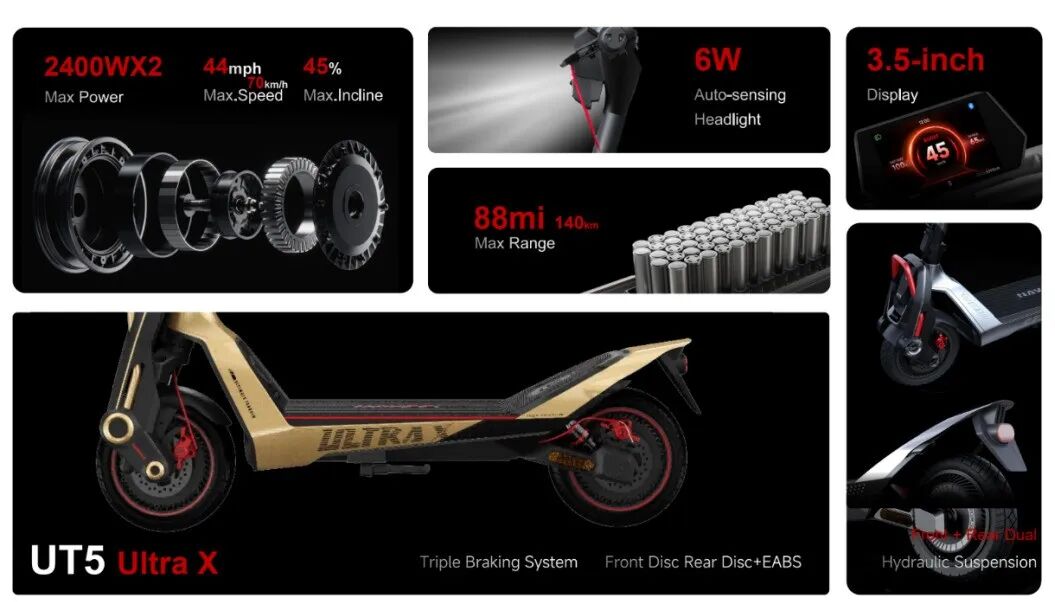
EnrichWheel, Xiaomi, Ninebot-Segway, GOTRAX, etc., all adhere to the same production management standards.
The content of this article is based on the integration of public information on the Internet and is for reference only. It does not constitute any investment or trade decision-making advice